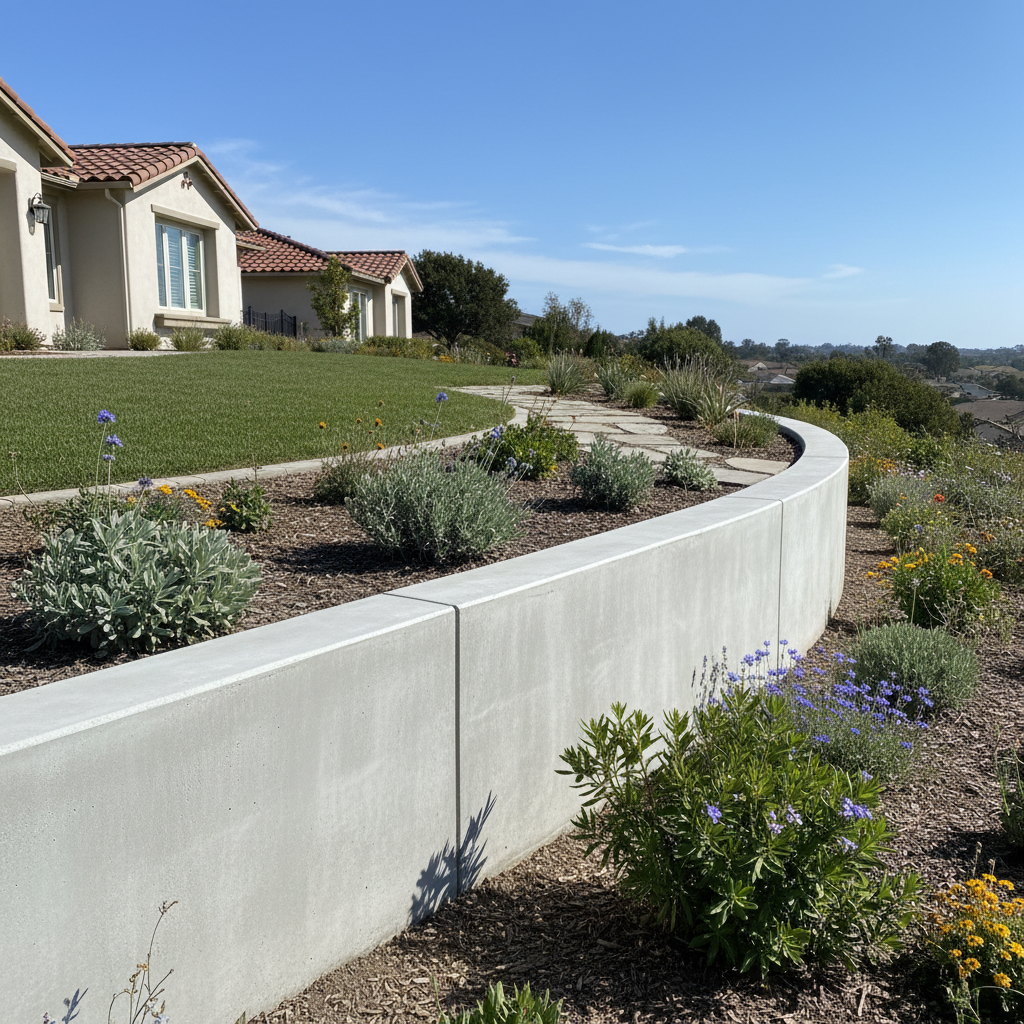
Your concrete retaining wall isn't just there to look nice; it's actually holding back a whole lot of earth. It's a real workhorse, especially here in Ventura, where we've got hills, ocean air, and sometimes, a good amount of rain. You want that wall to last, right? Of course you do. So let's talk about keeping it in top shape.
Extend Your Wall's Lifespan: It's All About Drainage
The single biggest thing you can do to make your retaining wall last longer is to ensure water can get away from it. Concrete is tough stuff, but constant saturation and hydrostatic pressure are its enemies. When we build walls at Precision Concrete Ventura, we always make sure there's proper drainage behind the wall, usually with gravel backfill and a perforated pipe – you know, a 'French drain.' If your wall was built correctly, that system is already there. Your job? Just keep it clear.
- Keep weep holes open: Lots of walls have small holes (weep holes) down near the bottom. These let water drain out. Make sure they aren't clogged with dirt, leaves, or plant roots. A stick or a garden hose can usually clear them right out.
- Manage surface water: Take a look at where rainwater goes around your wall. Are downspouts from your roof dumping directly onto the soil right behind it? Redirect them, for crying out loud. Is the ground sloping towards the wall, funneling water there? You might need to regrade a little or install a small swale to send that water somewhere else.
- Don't overwater plants: If you've got landscaping above or near the wall, be mindful of your irrigation. You really don't want to constantly soak the soil directly behind the wall. Drought-tolerant plants are a smart choice for this reason, and hey, they thrive in our Ventura climate anyway.
Regular Maintenance: Simple Checks, Big Payoffs
You don't need to be out there every single day, but a quick check a couple of times a year — maybe after a good rain or before summer — can save you a ton of headaches down the line.
- Clean it up: Get rid of any dirt, moss, or algae buildup on the wall's face. A stiff brush and some water usually do the trick. For tougher spots, a mild bleach solution (1 part bleach to 3 parts water) can help, but remember to rinse it thoroughly afterward so you don't harm any nearby plants.
- Check for cracks: Small hairline cracks? Those are often just on the surface and usually not a big deal. But keep an eye on them. If they start to widen, lengthen, or if you see new, larger cracks, that's a red flag. We'll talk more about that in a minute.
- Look at the base: Is the ground around the base of the wall eroding away? You want the footing to stay covered and stable. If you spot significant erosion, you might need to add some soil or gravel to protect it.
- Inspect the top: If your wall has a cap, check if any pieces are loose or cracking. Water can sneak into the wall structure through damaged caps, which is never a good thing.
Warning Signs: When to Pay Attention
Some issues are minor, others are serious. Knowing the difference can save your wall and your wallet.
- Horizontal cracks: These are often more concerning than vertical ones. A horizontal crack, especially one that runs for several feet, can mean significant pressure is building up behind the wall.
- Bulging or leaning: If a section of your wall looks like it's pushing outwards or tilting, that's a major problem. It means the wall isn't holding back the soil anymore. This is especially critical in areas like the hills above the Pierpont neighborhood, where soil stability can be a real concern after heavy rains.
- Stair-step cracks: These cracks follow the mortar joints in block or stone walls, but in a concrete wall, they'd show up as jagged, diagonal cracks. They often signal foundation movement or differential settlement.
- Water seeping through the wall face: If you see water consistently weeping through the concrete itself (not just the weep holes), it means your drainage system might be clogged or just not enough, and water is saturating the concrete.
- Significant erosion at the base: If the ground supporting the wall's foundation is washing away, well, the wall's stability is compromised.
When to Call a Professional
Look, I'm a contractor, so you might think I'd tell you to call us for everything. But honestly, a lot of the basic maintenance you can handle yourself. However, for those bigger warning signs, you really need to bring in someone who knows what they're doing.
If you see any significant bulging, leaning, or widening cracks, don't wait. These aren't just cosmetic issues; they're structural. A failing retaining wall can be a serious safety hazard and a massive expense if it completely collapses. At Precision Concrete Ventura, we can come out, assess the situation, and give you an honest opinion on what's going on. Sometimes it's a simple repair, other times it might mean a more extensive fix, but catching it early is always better.
Your retaining wall protects your property and adds value. A little bit of attention now can prevent a huge headache down the road.