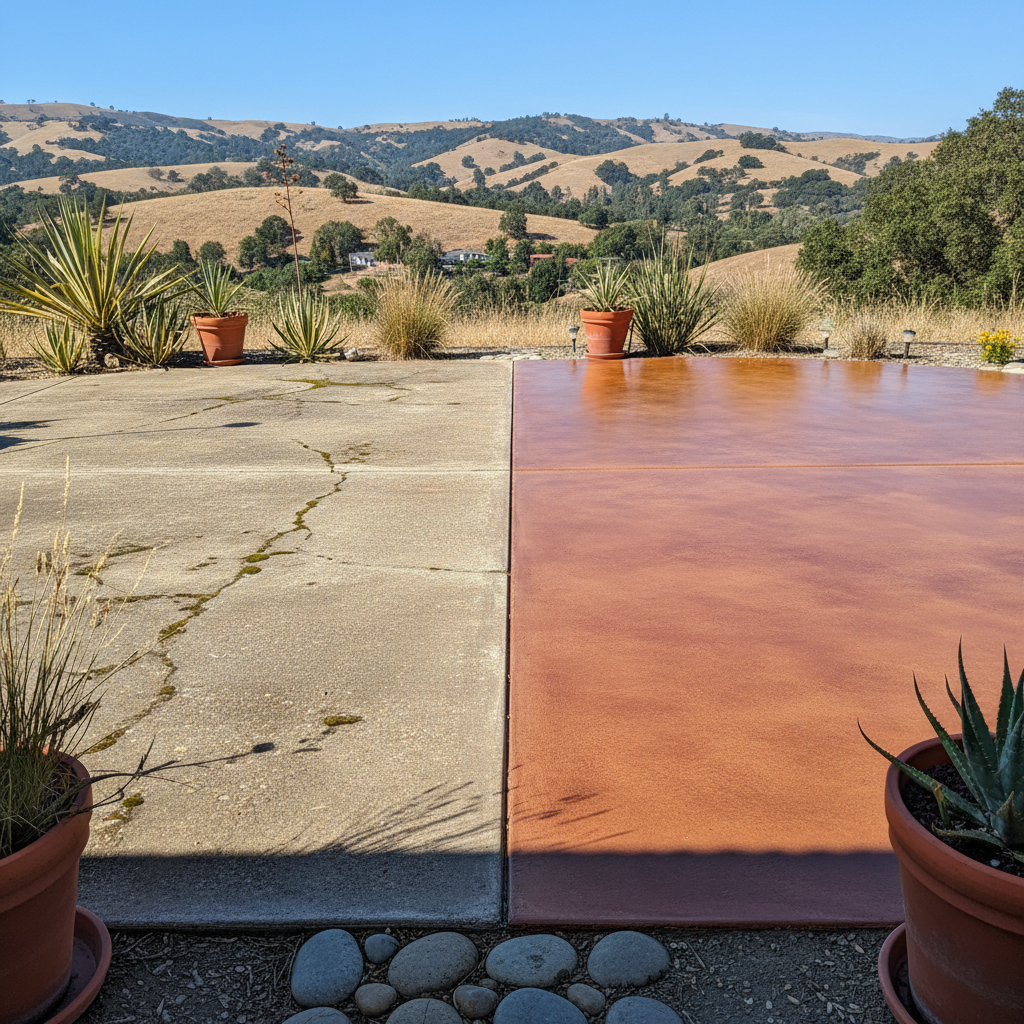
Thinking about giving that old concrete patio or driveway a facelift? Smart move! Staining can really change a space, making it look much more intentional and less like, well, just a plain concrete slab. But once you start digging into it, you'll quickly find there are two main paths: acid-based stains and water-based stains. Homeowners all over Ventura ask me about this regularly, so let's really get into the differences.
Acid-Based Stains: The Classic Look
Acid-based stains, sometimes called reactive stains, have been around forever. They work by setting off a chemical reaction with the minerals in your concrete, usually lime. This reaction actually changes the concrete's color itself, instead of just sitting on top. Imagine it like a translucent wash that becomes part of the concrete's very fabric.
The Good Stuff:
- Deep, Earthy Tones: You'll get these gorgeous, varied, mottled looks – almost like natural stone. Every slab reacts a little differently, which means you'll end up with a truly unique finish.
- Permanent Color: Because it's a chemical reaction, the color won't chip, peel, or fade the way paint might. It's literally embedded in the concrete.
- Durability: Once sealed, this stuff holds up incredibly well to foot traffic and even cars. It's a tough finish, no doubt about it.
The Not-So-Good Stuff:
- Limited Color Palette: You're mostly looking at earthy tones – browns, tans, greens, and some blues. If you're hoping for bright red or a solid gray, this just isn't the right choice.
- Unpredictable Results: This is a big one to consider. The final color depends entirely on the concrete's makeup, its age, and how it was originally poured. An old patio down in the Pierpont area might react completely differently than a newer driveway up in the hills, you know? You can do test patches, but there's always a bit of a surprise.
- Surface Prep is Key: Any old sealers, paint, or even plain dirt will block the reaction, leading to splotchy results. You really need a super clean, bare surface for this to work right.
Water-Based Stains: Modern Versatility
Water-based stains are a newer option, basically acrylic polymers mixed with pigment. Instead of reacting with the concrete, they soak into the surface and deposit color. Think of it more like a very thin, translucent paint that gets absorbed.
The Good Stuff:
- Huge Color Range: This is where water-based really shines. You can get almost any color you can dream up – vibrant blues, deep reds, solid grays, even pastels.
- More Predictable: What you see on the color swatch is generally what you'll get on your concrete, assuming it's applied correctly. Way less guesswork than with acid stains.
- Easier Application: While you still need a clean surface, they're generally more forgiving than acid stains. You don't have to neutralize an acid, for instance, which simplifies things.
- Can Be Used on More Surfaces: They can even go on concrete that's already been sealed or has some minor flaws, though a clean surface is always your best bet.
The Not-So-Good Stuff:
- Less Translucent Look: Even though they penetrate, they don't give you that same deep, mottled, translucent effect as acid stains. They tend to look a bit more uniform. Some people prefer that, but others find it less natural.
- Durability: They're durable, especially with a good sealer, but some folks might argue they don't have the same 'part of the concrete' permanence as acid stains. They can wear down over time, particularly in high-traffic spots or if exposed to constant sun like we get here in Ventura.
- Can Show Wear: If the top layer wears down, you might see the original concrete underneath. This means you might need to reapply sooner than you would with a properly done acid stain.
So, Which One Should You Choose for Your Ventura Home?
Honestly, it really boils down to the look you're going for and how much you can handle a little unpredictability.
If you're dreaming of a rich, earthy, natural stone look, and you're okay with some variation and a more limited color palette, an acid stain is probably your best bet. It's a classic for a reason, and when done right, it's incredibly durable. For a patio or walkway you want to blend seamlessly with your landscaping – especially with all the natural stone and drought-tolerant plants we see around here – acid can be perfect.
But if you have a very specific color in mind, or you want something more modern, vibrant, or predictable, then a water-based stain is definitely the way to go. It offers incredible versatility for matching your home's exterior or making a bold statement. For a garage floor or a more contemporary outdoor living space, the predictable color and wide range of options might be exactly what you need.
From a cost perspective, they're often pretty similar in terms of materials and labor for a professional job. The real difference is in the aesthetic and how they interact with your concrete. Whichever you choose, make sure the concrete is prepped correctly and sealed properly afterward. That's where Precision Concrete Ventura comes in – we've seen it all and can help you pick the right solution for your specific slab and vision. Don't skimp on the sealer; it's what protects your investment, especially with our coastal weather and occasional heavy rains.